
Why Editorial Portrait Photography Is Replacing Traditional Corporate Headshots in 2026
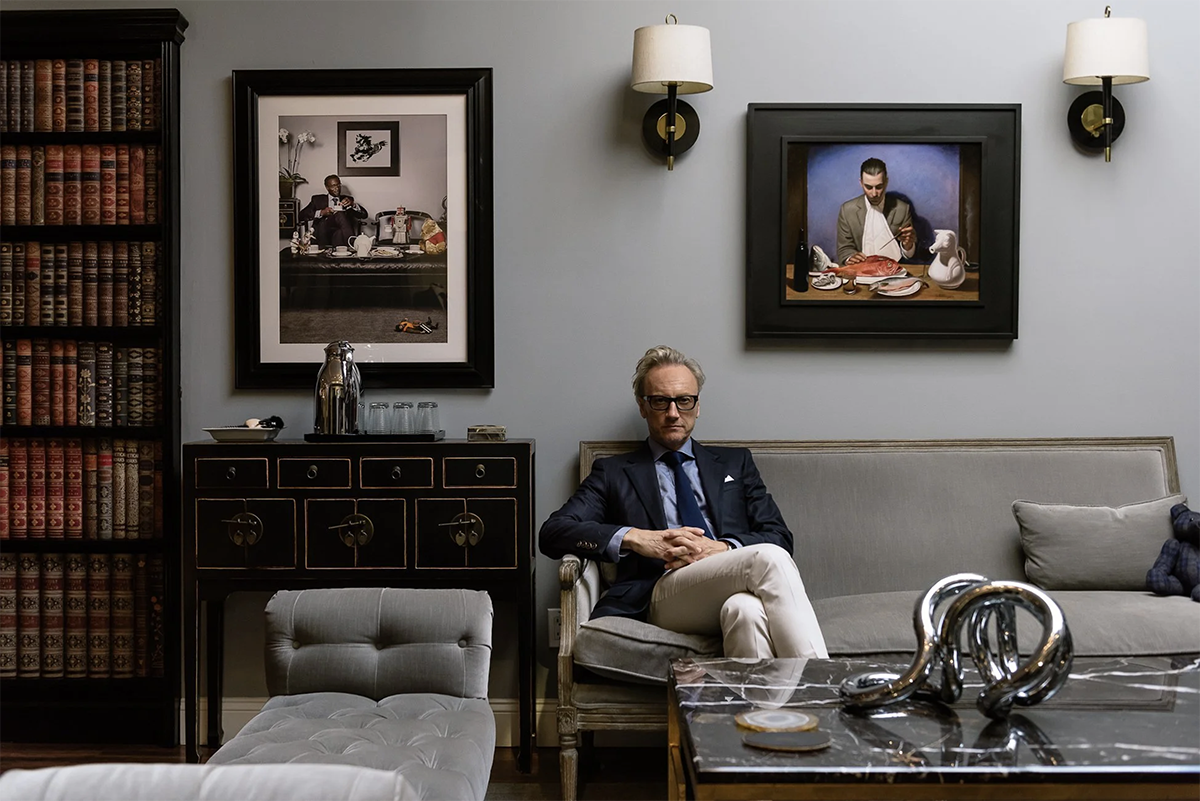
Why businesses are increasingly turning to environmental and editorial portrait photography to create more personal, authentic images than traditional corporate headshots.
For a long time, the corporate headshot served a clear purpose: provide a recognizable image of a person. Neutral background, even lighting, controlled expression. Efficient, consistent, and largely interchangeable.
In 2026, that format feels increasingly disconnected from how portraits are used and understood. Images now circulate across personal websites, editorial platforms, press features, books, and professional profiles. They are expected to communicate intent and presence, not simply confirm identity.
This is why editorial portrait photography and environmental portrait photography are increasingly replacing traditional corporate headshots.
Context Over Isolation
Traditional headshots remove the subject from their environment. Editorial portraits do the opposite. They acknowledge that identity is shaped by place—by architecture, light, scale, and atmosphere.
Environmental portrait photography places people within spaces that resist simplification. The environment is not descriptive decoration; it is structural. It influences how the subject is perceived without explaining them explicitly.
The portrait becomes less about presentation and more about presence.
When Neutral Becomes Anonymous
Neutral backgrounds once signaled professionalism. Today, they often read as absence.
As visual culture becomes more sophisticated, viewers instinctively look for spatial cues: how someone occupies a room, how light interacts with the environment, how posture relates to scale. Without these cues, even technically refined portraits can feel generic and interchangeable.
Editorial portrait photography accepts specificity. Shadow, contrast, and spatial tension are not imperfections—they are information.
Authenticity in an Age of Synthetic Images
Another factor accelerating this shift is the growing saturation of AI-generated and heavily polished imagery.
In 2026, audiences are surrounded by images that are technically flawless, endlessly adjustable, and increasingly detached from lived experience. While these tools are effective for illustration and concept generation, they often remove friction, resistance, and physical presence—the very elements that make portraits feel human.
As a result, there is renewed value in photographs that carry evidence of reality: imperfect light, physical space, and the trace of an actual encounter between photographer and subject.
This is not a rejection of technology. It is a recalibration of value.
Environmental Portraiture as Editorial Language
Environmental portraiture is not a recent invention. It has long been central to editorial practice.
Photographers such as Arnold Newman demonstrated that a portrait could describe a person through composition and spatial relationships rather than expression alone. In his work, architecture and environment function as narrative structure.
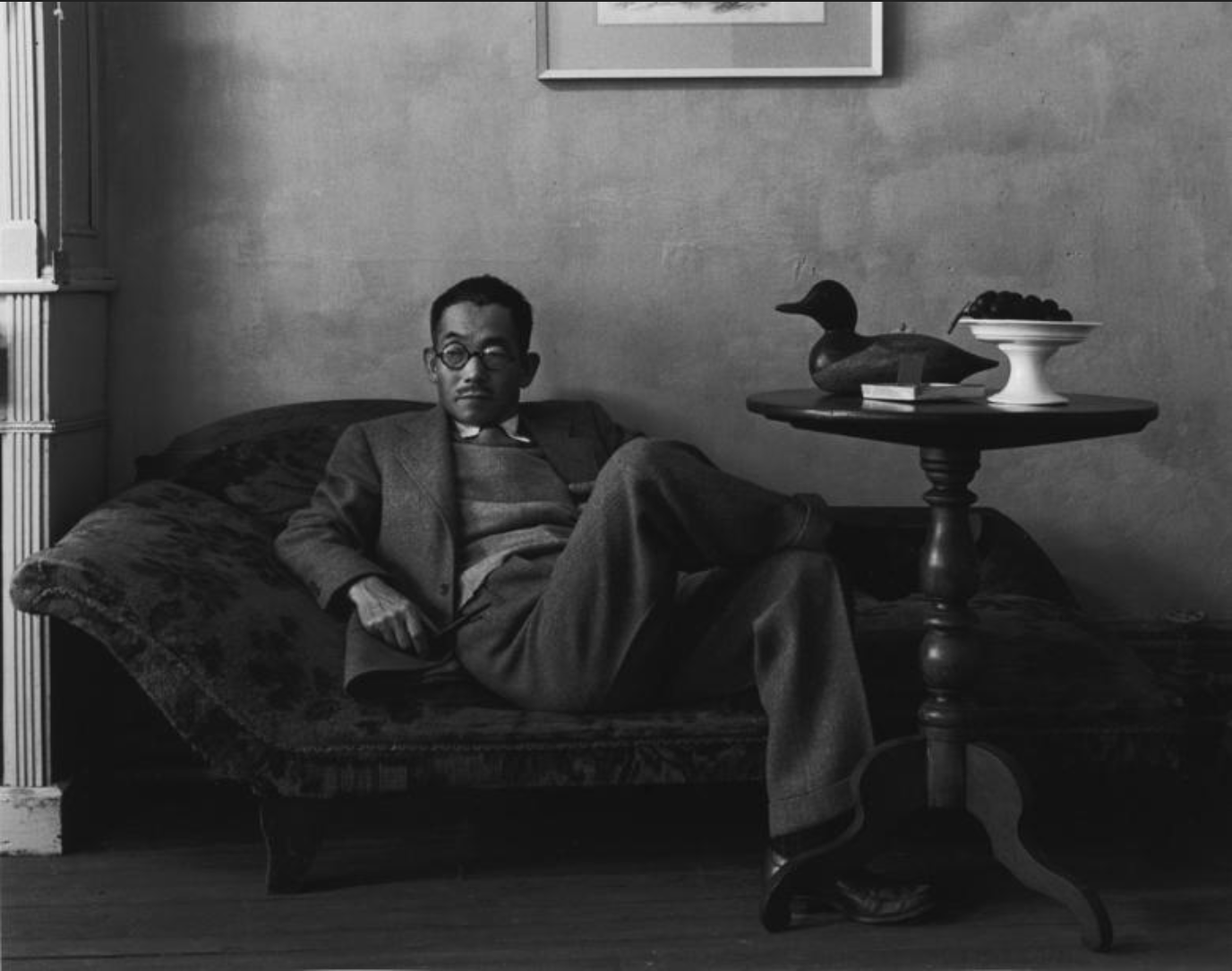
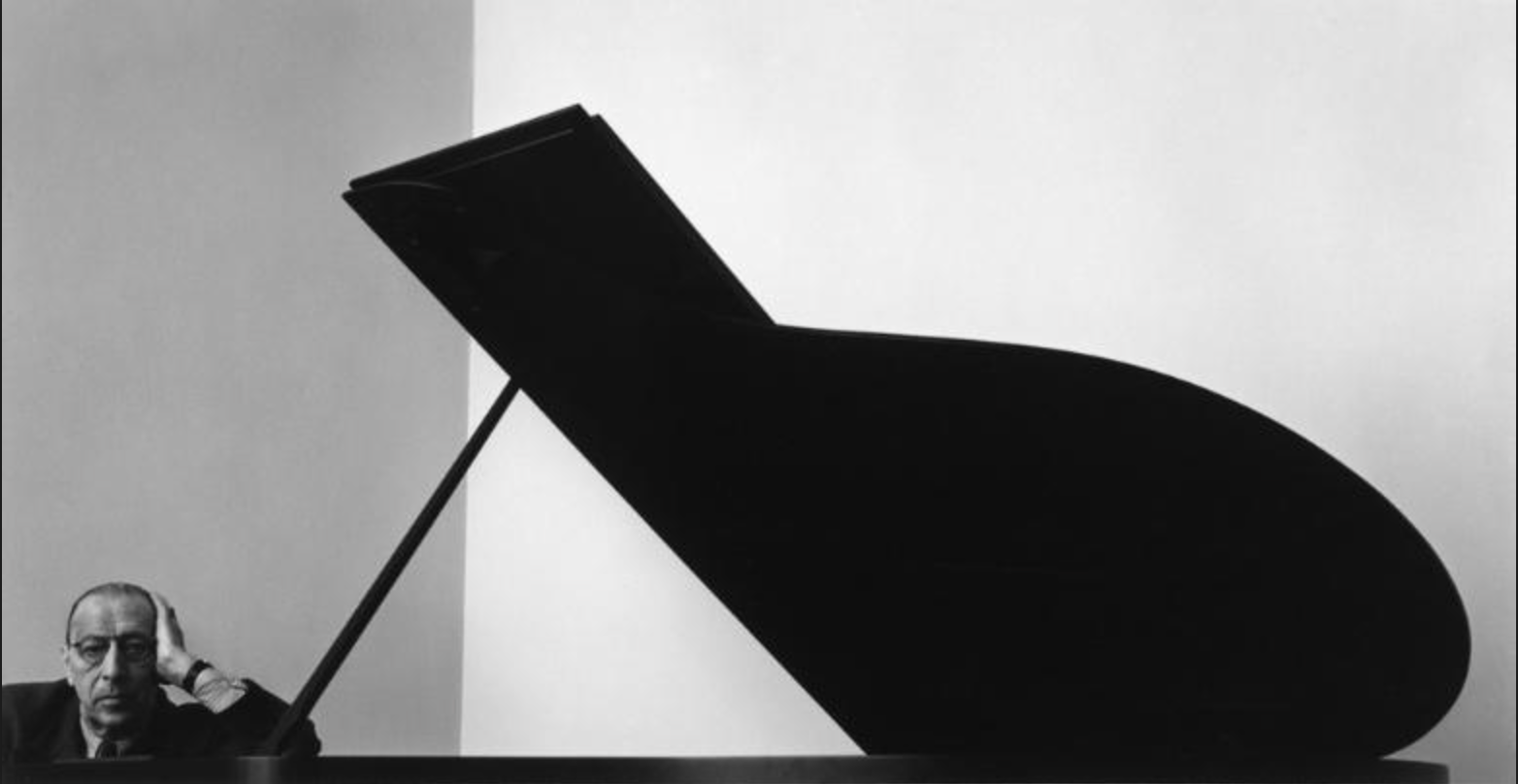
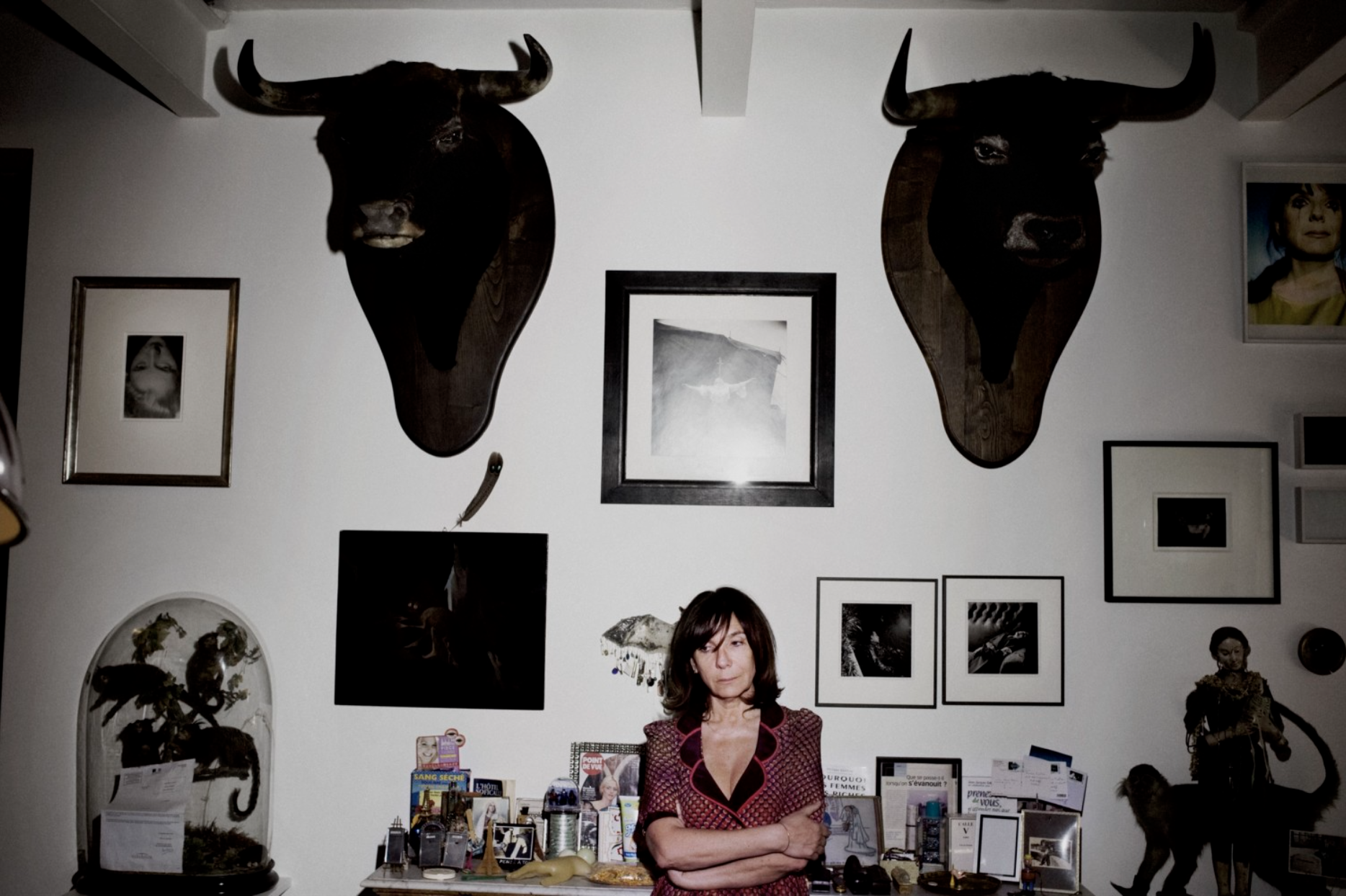
A more contemporary and uncompromising continuation of this approach can be found in the work of Alex Majoli.
In Majoli’s portraits, the environment remains dominant. Space introduces imbalance. Light creates pressure. The surroundings do not explain the subject—they confront them. The portrait emerges from tension between presence and space, not from pose or performance.
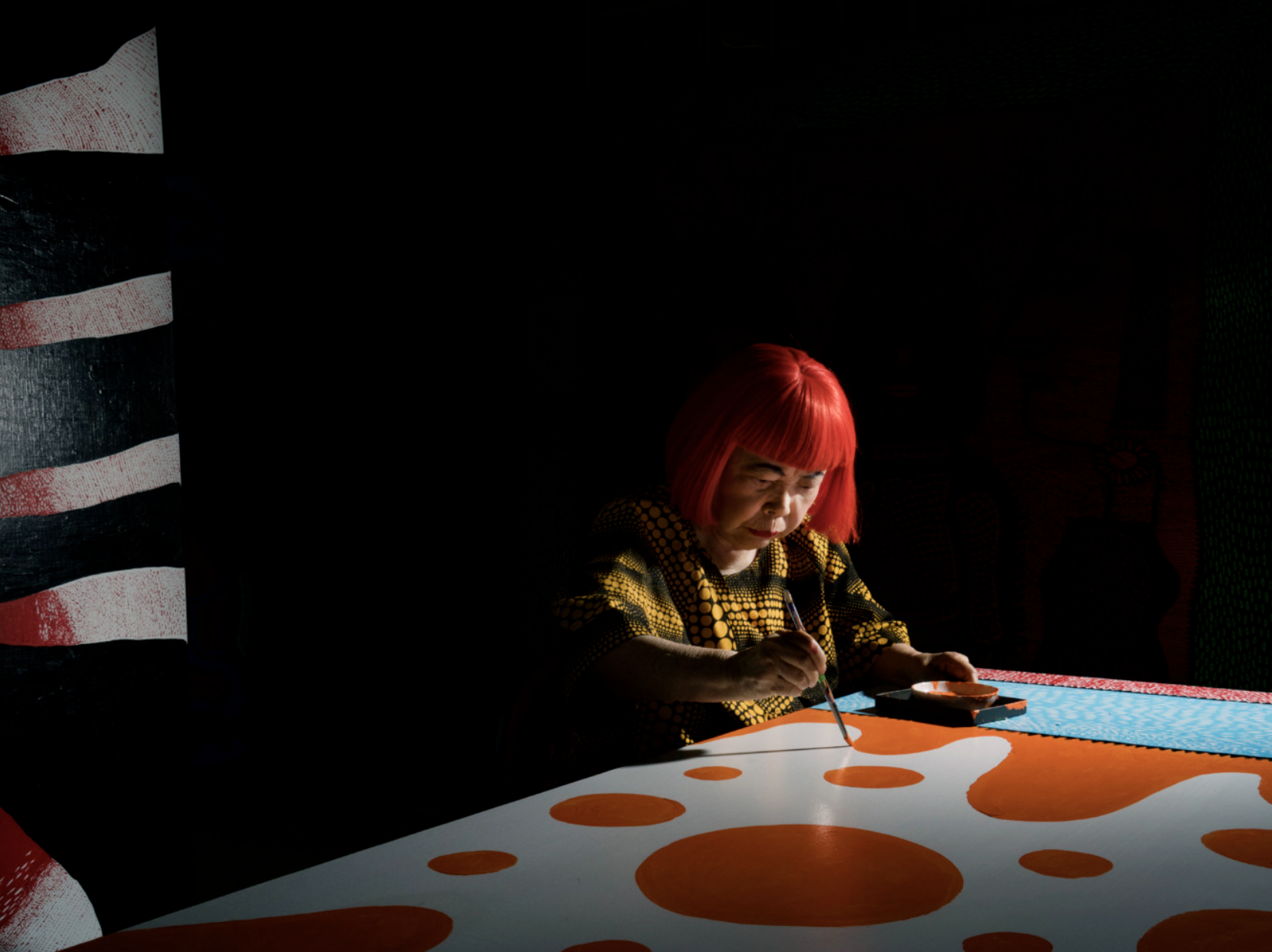
Environmental Portraiture as Editorial Meaning
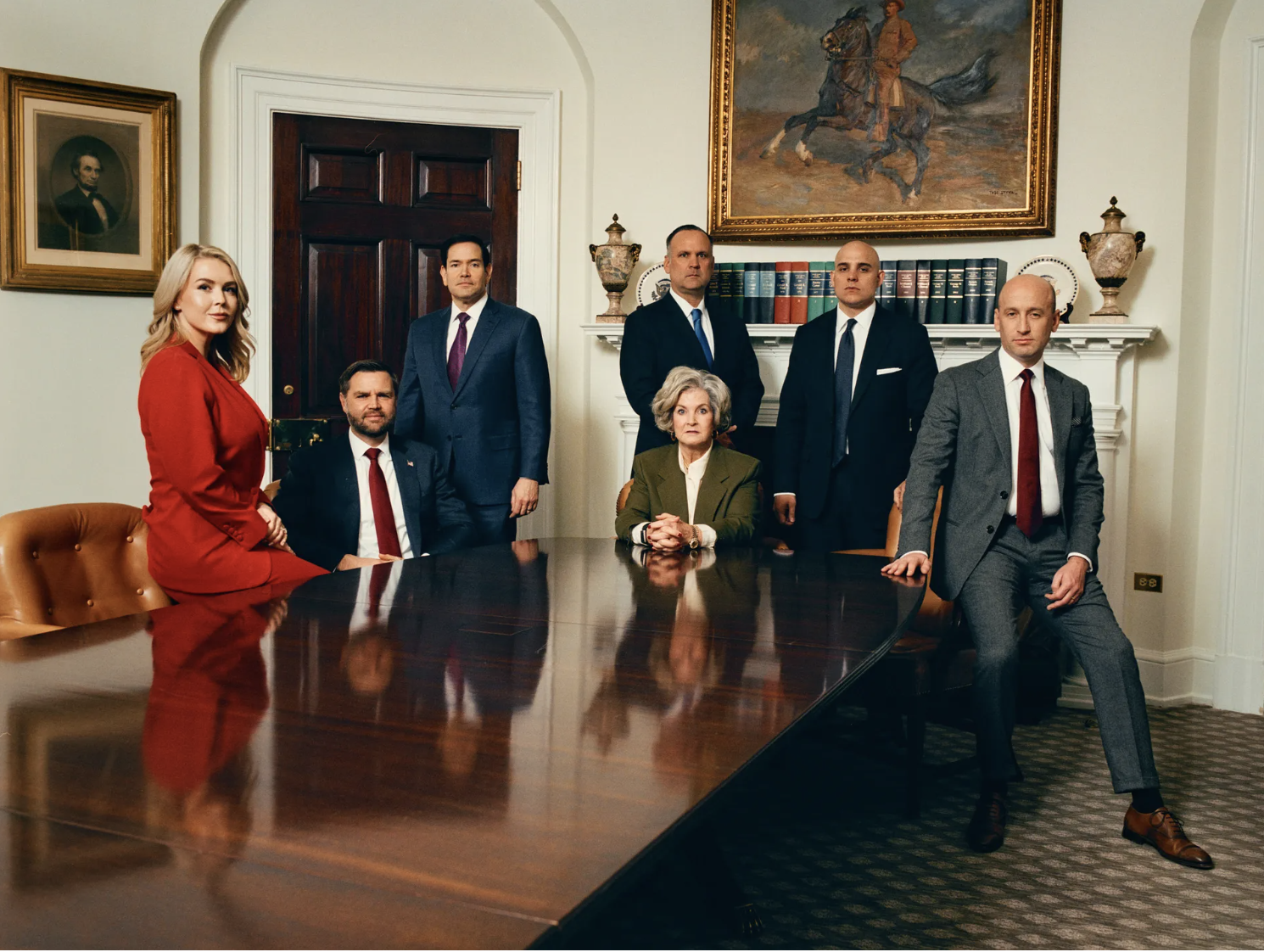
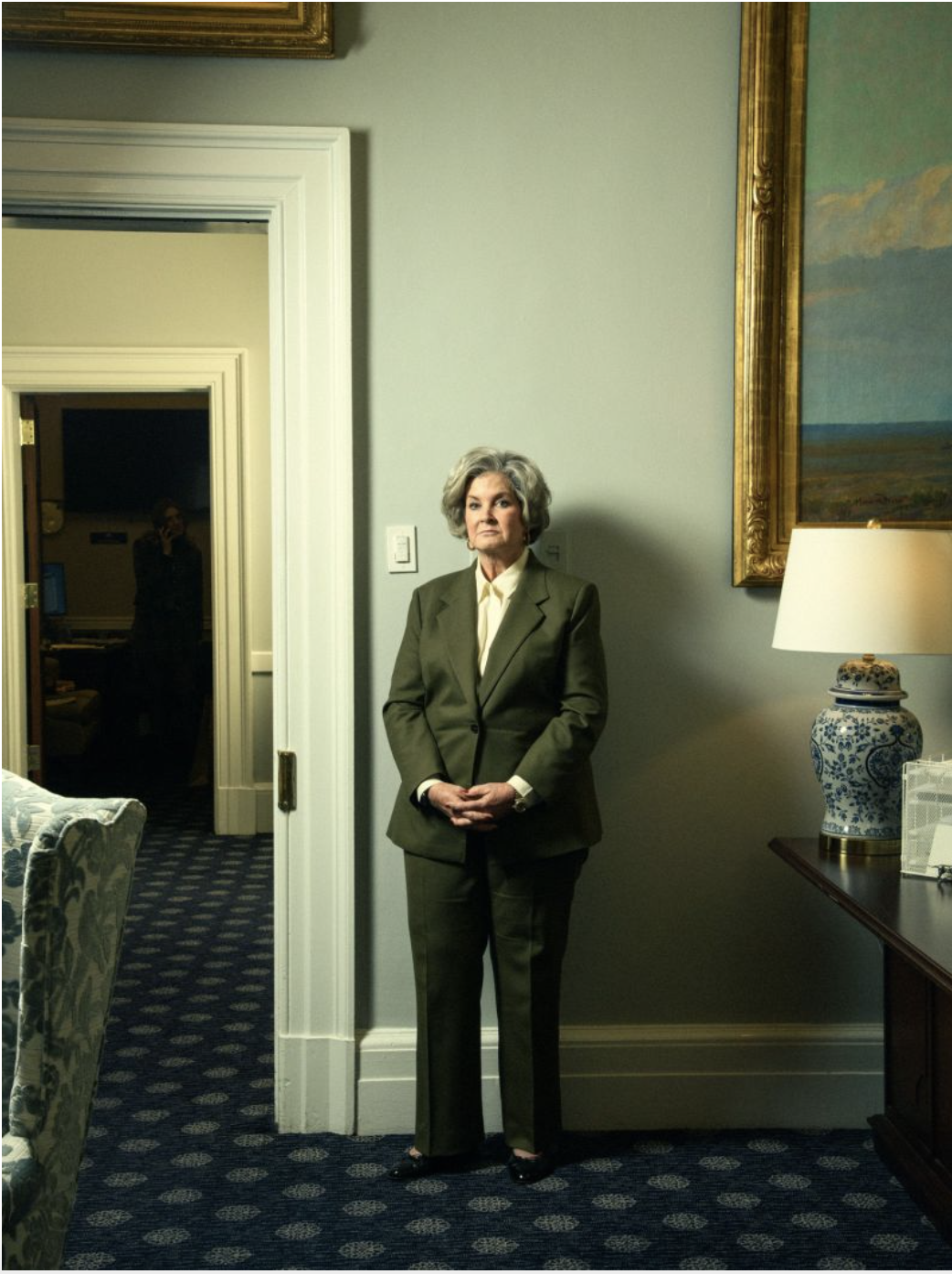
A strong contemporary example of environmental and editorial portrait photography can be found in the recent work of Christopher Anderson who was commissioned by Vanity Fair to shoot portraits at the White House. These portraits demonstrate perfectly how a photograph, made within a very specific environment and shaped by deliberate lighting, can significantly influence how a subject is perceived.
Why This Shift Matters Now
The move away from traditional corporate headshots is not a stylistic preference. It reflects a broader change in how images are read, shared, and trusted.
As visual culture becomes increasingly shaped by polished and synthetic imagery, portraits that retain context, friction, and presence gain relevance. Editorial and environmental portrait photography responds to this shift by offering images that feel situated rather than optimized.
In this context, portraiture becomes less about presentation and more about meaning—an image shaped by space, light, and encounter rather than surface perfection.